
Building Neuroaffirming Care into the Pediatric Dentistry Curriculum
By Christina Boufis
In October 2024, as he was beginning his role as chair of the Department of Pediatric Dentistry at the Arthur A. Dugoni School of Dentistry, Dr. Rinku Saini began thinking about how the pediatric dentistry team could better prepare to care for children in the future, particularly those with developmental disabilities and neurodevelopmental differences.
Our goal is to make neuroaffirming care part of the ethos of pediatric dentistry at the Dugoni School—not the expertise of one or two people, but part of our collective knowledge, culture and approach to care.
One document that helped shape his thinking was the American Academy of Pediatrics’ July 2024 clinical report, Oral Health Care for Children and Youth with Developmental Disabilities. The report identified dental care as one of the greatest unmet health needs for children and youth with developmental disabilities and describes barriers across six areas: accessibility, availability, accommodation, affordability, acceptability and appropriateness.
“The report gave me a framework,” Saini says. “I looked at each of those six barriers and asked what we could do, as a department and as a dental school, to meaningfully address each one.”
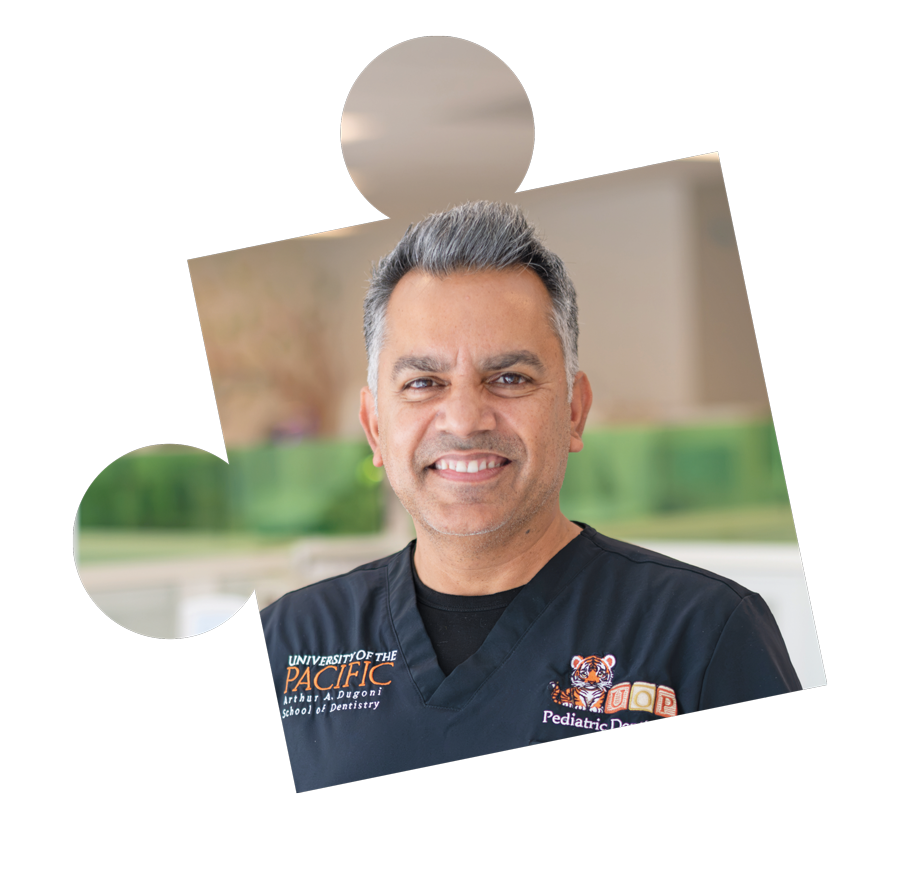
Dr. Rinku Saimi
The document also raised broader questions about how to prepare faculty and students to care for individuals with special healthcare needs. “Were we teaching our students the current best practices in neuroaffirming care?” Saini wondered. “And, as the Dugoni School continues to grow in its ability to provide complex care, can we position ourselves to lead nationally in both providing this care and preparing future dentists to deliver it?”
Neuroaffirming care is an approach to healthcare that recognizes and respects neurological differences—such as autism, ADHD and PTSD—and supports patients’ individual treatment needs rather than taking a one-size-fits-all approach. Practitioners recognize and value these differences, seek to understand and respect patients’ experiences and challenges and provide care tailored to each patient’s unique needs.
Saini experienced the Leadership Education in Neurodevelopmental and Related Disabilities (LEND) model during his pediatric dentistry residency at Children’s National Medical Center in Washington, D.C. “That experience taught me the value of learning alongside physicians, psychologists, parents, advocates and other professionals,” Saini says. “It changed the way I thought about caring for children with different developmental, sensory, communication and behavioral support needs.”
As he considered how to build that expertise across the Dugoni School’s pediatric dentistry faculty, Saini reached out to the University of California, Davis MIND Institute, home to their LEND program and a nationally recognized center focused on neurodevelopmental disabilities, interdisciplinary education, research, clinical care and community engagement.
“I appreciated the strength of their program and the opportunity to bring pediatric dentistry into that interdisciplinary environment,” Saini says. The MIND Institute welcomed Dugoni School’s pediatric dentistry faculty into its program. Providing opportunities for four dental school faculty members represented a meaningful commitment to the partnership and to incorporating oral health into the interdisciplinary model.
The LEND program is led by Program Director Janice Enriquez, PhD, a clinical child psychologist and Program Manager Kelly Heung, PhD, MS. “We are incredibly grateful to the UC Davis LEND program leadership, Dr. Heung and Dr. Enriquez, for welcoming us into the community,” Saini says. “They have given our faculty an extraordinary opportunity to learn from experts across disciplines and then bring that knowledge back to our students, our department and the families we serve.”
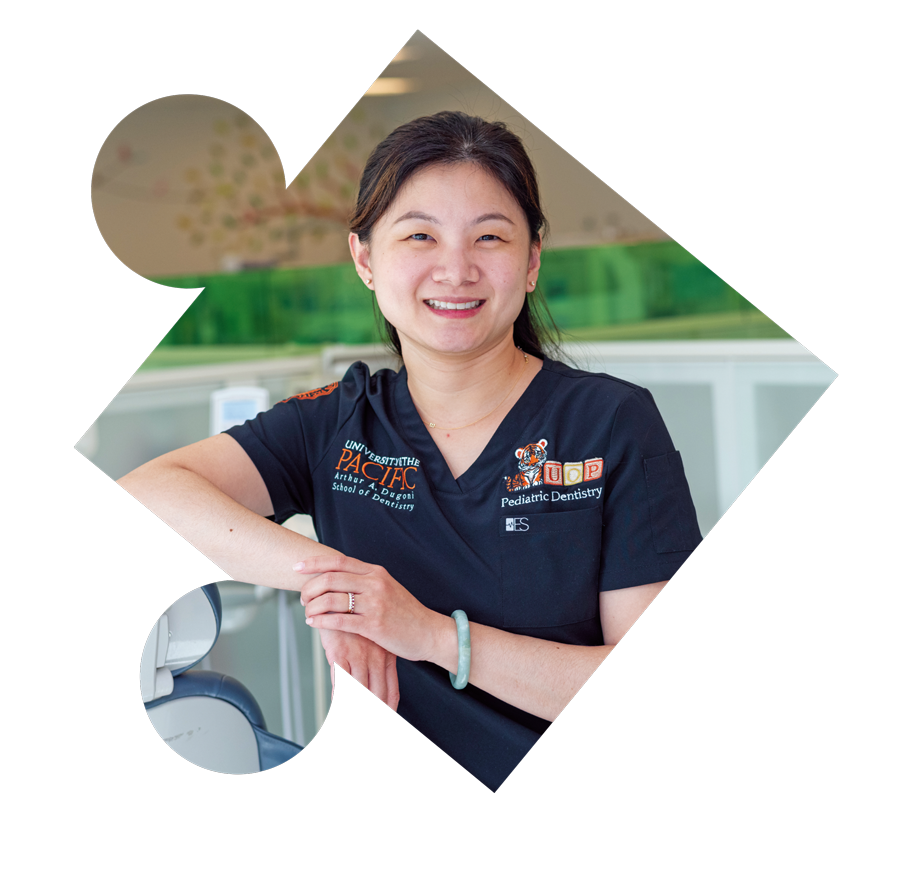
Dr. Alice Chan ’12
The partnership has already produced its first cohort of LEND-trained pediatric dentistry faculty members from the Dugoni School. In addition to Saini, Dr. Alice Chan ’12, assistant professor and director of preclinical curriculum; Dr. Simon Morris ’96, clinical assistant professor; and Dr. David Lee ’88, assistant professor, have completed the rigorous program.
“The LEND program was one of the most formative experiences of my career so far,” says Chan. “As dentists, we rarely have the opportunity to sit at the same table with clinical psychologists, developmental behavioral pediatricians or speech language pathologists, and spend every day thinking about how neurodiverse individuals experience the world.”
This year, the department’s next cohort—Drs. Graham Hearn, Paul Johnson, Adolfo Barrera and Kristina Langworthy—will begin their LEND training at the MIND Institute.
“I want our faculty to become national leaders in caring for children with special healthcare needs,” Saini says. “Our goal is to make neuroaffirming care part of the ethos of pediatric dentistry at the Dugoni School—not the expertise of one or two people, but part of our collective knowledge, culture and approach to care.”
The first cohort to complete the LEND training all agree on how valuable and transformative the program has been. “It was a great experience to collaborate with other healthcare professionals,” Morris says. “Hearing from a school nurse, a psychiatrist, a social worker and neurodevelopmental pediatrician as they collaborated on a diagnosis and tried to figure out the best course of action for that child, left me in awe.”
Parents and caregivers also shared their everyday struggles and stories with the group. “Learning about neurodivergent conditions from a parental point of view was really eye opening,” Lee says. “When we see kids in the dental clinic, we don’t really know their background or all the things that go on in their lives when they have special needs,” Lee explains. “Hearing from caregivers and parents was invaluable. They became our teachers. The experience made me more empathetic and compassionate and left me wanting to learn even more so we can provide the best possible care.”
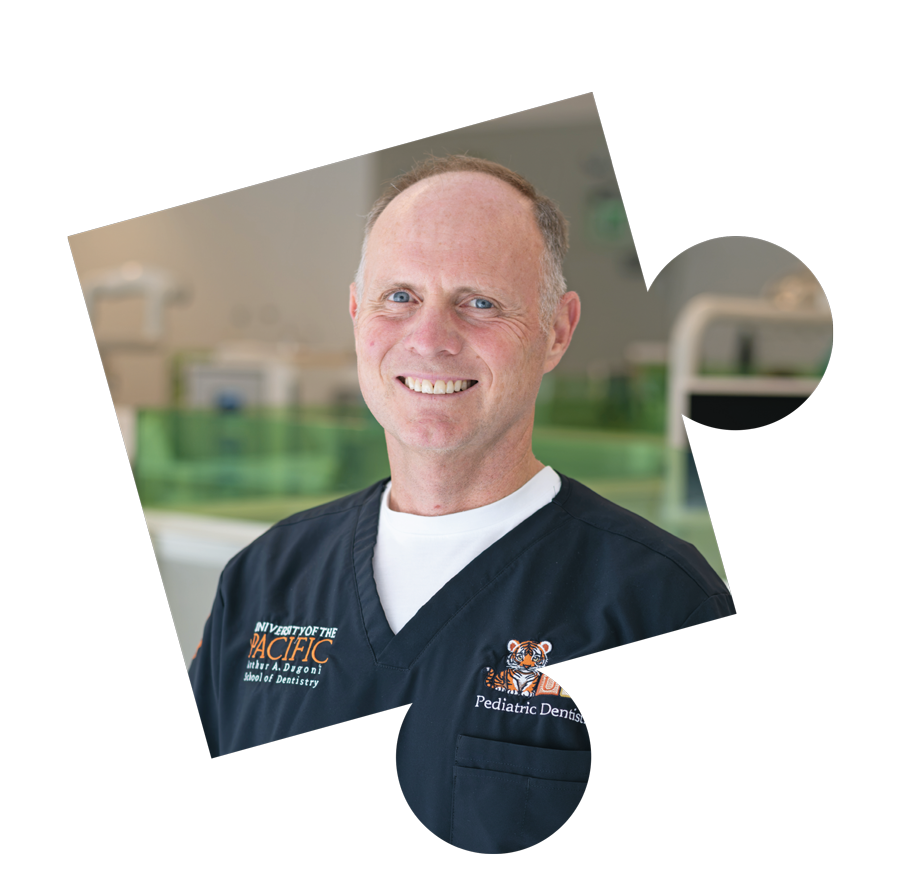
Dr. Simon Morris
The impact of the LEND experience is already extending beyond faculty development. Neuroaffirming care has been integrated into the Dugoni School’s pediatric dentistry curriculum, giving students practical approaches for caring for patients with different sensory, communication, developmental and behavioral support needs. These principles are also being incorporated into the school’s broader integrated clinical sciences curriculum.
“Part of the reason we completed the LEND program is because we want to be the best possible providers, but we also want to teach what we learned,” Morris says.
“Importantly, we’re framing this as much bigger than pediatric dentistry,” Saini says. “Every dentist will care for patients with different sensory, communication, developmental and behavioral needs. These are skills that should become part of how we educate every future dentist.”
For Saini, neuroaffirming care is also a natural extension of the Dugoni School’s longstanding humanistic philosophy.
“At its core, it’s about understanding the person in front of you— recognizing their individual strengths and needs and adapting our environment and approach when appropriate, rather than expecting every patient to adapt to us,” he says. “That is very much aligned with the Dugoni School’s philosophy of humanistic, patient-centered care.”

Dr. David Lee
Focusing on the strengths of children who may have autism or attention-deficit/hyperactivity disorder (ADHD) was another takeaway from the LEND program, Morris says. “A child with ADHD might be very creative or a child with autism may be innovative and recognize patterns that we might not,” he explains. “Or, a child with dyslexia might be a great storyteller, so looking for the positive and embracing that is something we can definitely use in our dental clinics.”
What began as an opportunity for a small group of faculty has become a broader effort to embed these principles throughout the department and, increasingly, across the education of dental students at the Dugoni School.
“Our goal is to train the next generation about neuroaffirmating care and help them recognize that it is not really an extra skill or something reserved for a specialist,” Chan says. “We want our students to view neurodiversity through a strengths-based, patient-centered lens and to develop an understanding of the barriers families face, so our students are more prepared to make their practices more accessible and inclusive.”
The focus on providing the best possible care for individuals with special needs also dovetails with the school’s new Ambulatory Surgery Clinic and Multidisciplinary Advanced Care Clinics currently under construction. The clinics will meet an urgent need in California for inclusive dental care, serving children and adults with developmental or acquired disabilities and sensory challenges, as well as seniors with dementia and anyone with complex medical conditions, all of whom previously may have had to travel long distances or wait months for care.
For instance, many children with autism have sensory sensitivities. “So loud noises or bright lights or lying back in the chair and having someone poke at your mouth, might not be okay for them,” Morris explains. “But, we can have dimmable lights or provide them with sunglasses or headphones or conduct an exam sitting up, and maybe not have three or four people in the room—but one or two—so we can build trust with the patient.”
Talking with parents and caregivers about what works best for their child is another way to help children feel comfortable in the clinic. “We start from a medical model. We may know about dentistry, but we don’t know the full context of our patient’s life,” Lee says. “It may take more patience, understanding and time, but getting more information from the parent or caregiver helps us work together as an effective team.”
Chan agrees. “Caring for these individuals requires much more than simply understanding a diagnosis,” she says, “but also listening to them and their families and looking at how we can adapt our communication and clinical environments to remove or mitigate barriers that could prevent patients from accessing care in the first place.”
“Our goal is to train the next generation about neuroaffirmating care and help them recognize that it is not really an extra skill or something reserved for a specialist.”
The answer to whether the dental school is positioned to lead the nation in providing neuroaffirmative care and preparing future dentists to deliver this care is a resounding yes.
“I believe neuroaffirming care is going to become an increasingly important part of dentistry in the coming years,” Saini says. “Through the generosity and partnership of the UC Davis MIND Institute, we have been fortunate to get an extraordinary head start. Now our responsibility is to build on that opportunity and make it part of how we educate our students, train future specialists and care for children and families.”
Christina Boufis, PhD, is a freelance health and medical writer from the East Bay.