
Dr. David W. Chambers Thinks in Terms of Outcomes
By Dr. Eric K. Curtis ’85
David W. Chambers, EdM, MBA, PhD, who retired in August 2026 as professor of diagnostic sciences and director of the clinical judgment laboratory, has, across a prolific 55 years of service to the dental school, dedicated much of his career to helping people thrive.
He goes about it in an unusual way.
“Don’t tell people what to do;” he says, ‘improve the system.”
Chambers applied research, observation and practical logic to cut through the chaotic vagaries of human behavior.
When I was a dental student in the early 1980s, I didn’t realize that Chambers had been managing our Comprehensive Patient Care course that ran all day Mondays for the first year. We were changing from a discipline-based clinical model to treating the whole patient. Among the new skills we had to master were treatment planning, health history and relating to all kinds of patients as human beings rather than, “if this is Wednesday, it must be removable dentures.” Chambers applied research, observation and practical logic to cut through the chaotic vagaries of human behavior. I still think Dave Chambers is dentistry’s philosopher king.
Chambers didn’t aspire to a career in dental education. Armed with a bachelor’s degree in psychology/philosophy and a master’s degree in educational research from Harvard University, along with a PhD in educational psychology from Stanford University, he first took a post at the School of Education at University of North Carolina, Chapel Hill. A decade later, he also completed an MBA at San Francisco State University.
The concept of humanism that began with Redig and was a lived passion for Dean Dugoni now became part of the structure of the school. It was not a course; it is “the way we do things around here.”
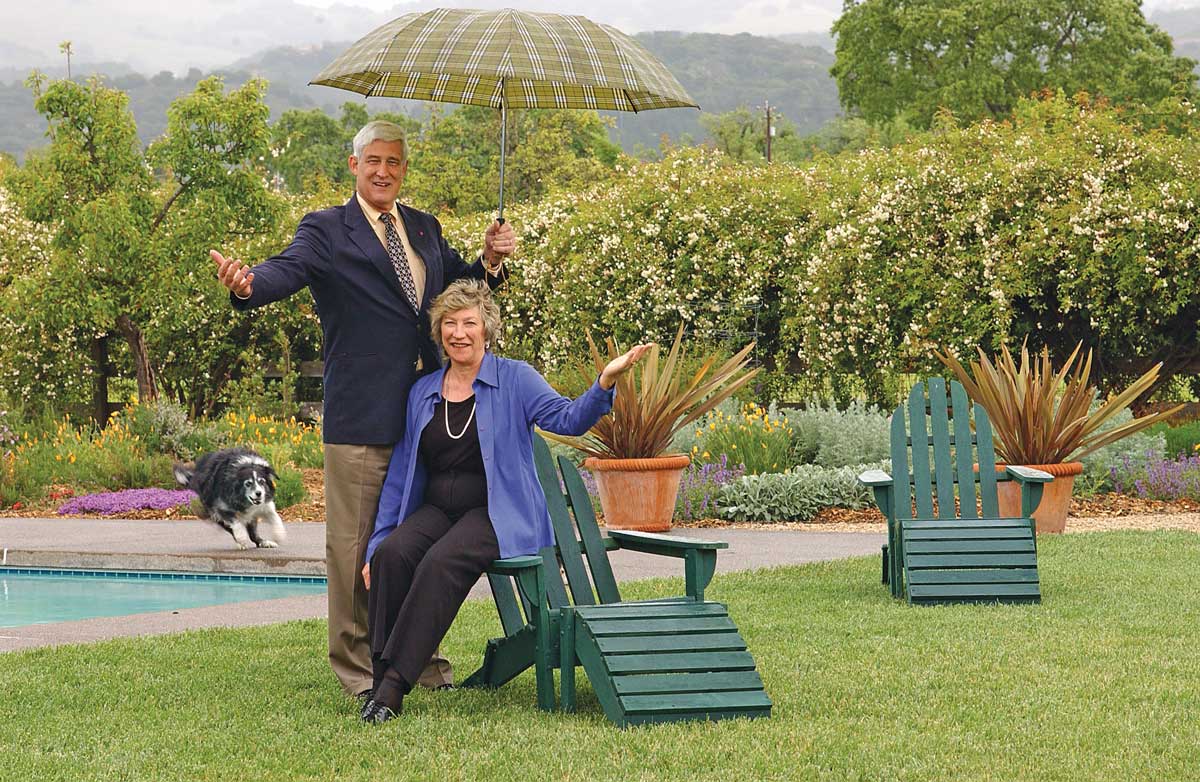
Chambers applied research, observation and practical logic to cut through the chaotic vagaries of human behavior.
He soon learned that UNC’s dental school had interest in behavioral sciences. “They wanted to know how to pick the strongest applicants,” he remembers, “and whether young adults learn differently from grade-school children. I had no idea, so I started to look into it.”
When the young analyst ventured some preliminary opinions, administrators were receptive, saying, as he recollects, “That sounds interesting. We will try it.” Such a response let Chambers know he was on his way to finding a home. “Those are the kind of people,” he says, “one wants to be associated with.”
Two years later, in 1971, Chambers arrived at University of the Pacific to consult on the dental curriculum. As he recalled at his retirement celebration, “We were a rigid, four-year program that beat up on students, regarded patients as clinical requirements with wallets attached and the entire faculty had published exactly one paper during the previous three years.”
The concept of humanism that began with Redig and was a lived passion for Dean Dugoni now became part of the structure of the school. It was not a course; it is “the way we do things around here.”
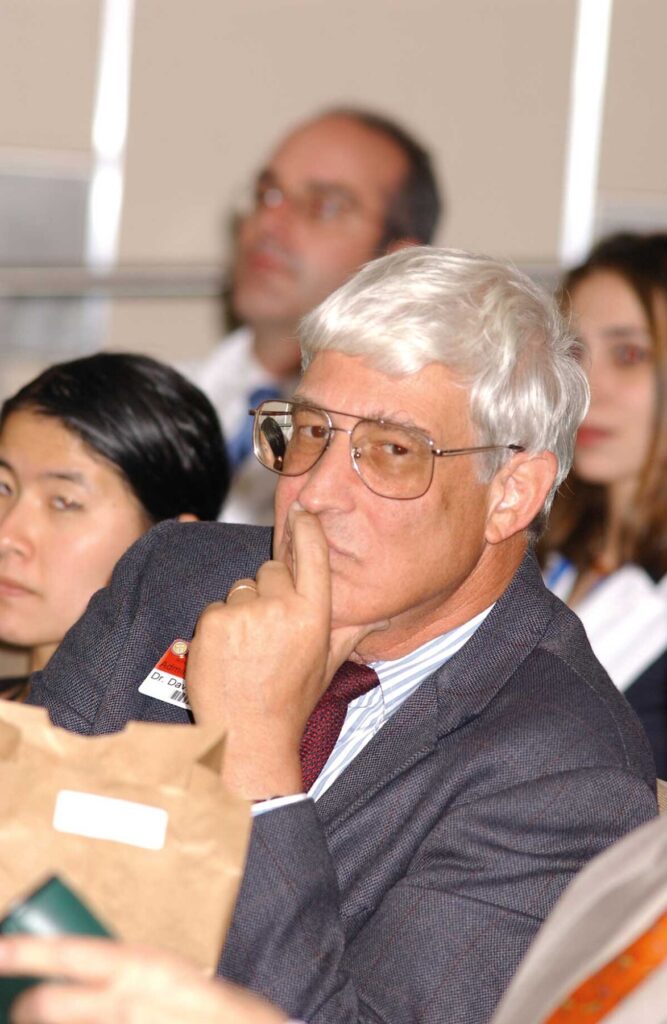
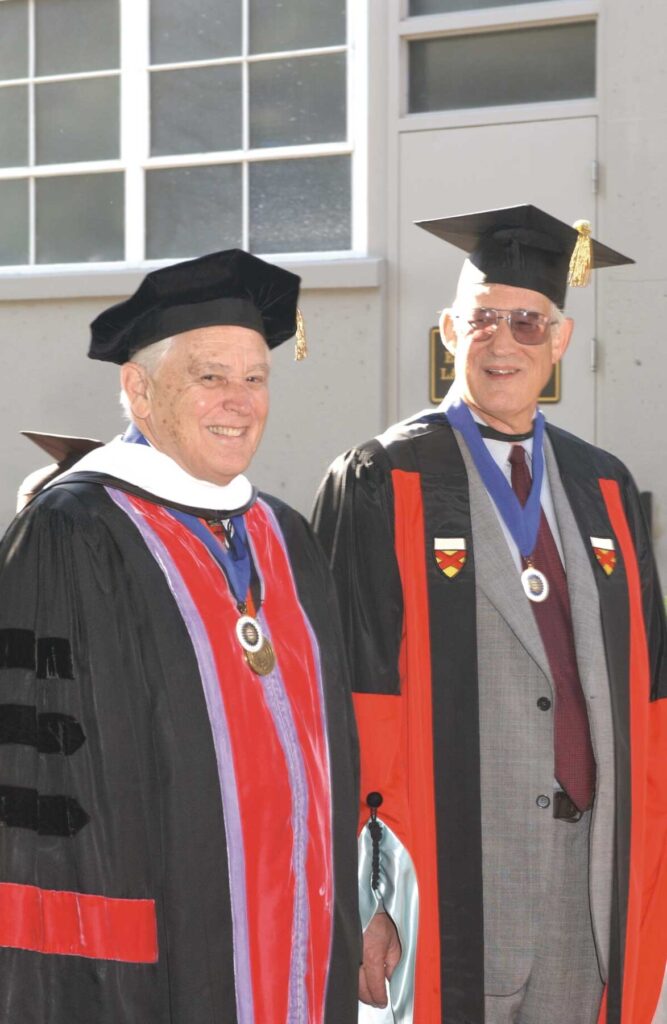
At first, people questioned why a non-dentist was teaching at a dental school. But, Chambers, says, “I always thought I was teaching dentists, not dentistry.” Ever the listener, he noticed that instruction, largely organized by self-contained specialty fiefdoms, was fairly uncoordinated, and assessment uneven. The dental school’s educational plan, in fact, consisted of “all the things the instructors wanted to talk about, and little focus on what the students should be able to do upon graduation.”
In 1973, Dean Dale Redig instituted a 36-month DDS curriculum. Chambers was tapped to work out the new curriculum. He says, “By focusing on essential outcomes rather than clock hours, we had become the only three-year dental program.”
Dean Arthur A. Dugoni ’48 moved Chambers from course director to associate dean for academic affairs and scholarship. A new dimension was added to our educational system. The concept of humanism that began with Redig and was a lived passion for Dean Dugoni now became part of the structure of the school. It was not a course; it is “the way we do things around here.”
Other dental schools followed. Comprehensive patient care, humanism and competency-based education are now the accreditation standards required by the Commission on Dental Accreditation of all oral health education programs. Schools “must show that their graduates demonstrate the knowledge, skills and values necessary to begin independent practice.” In the 17 years that Chambers served as associate dean for academic affairs and scholarship, the dental school’s “yield,” the percentage of students who get their degree and license when expected, rose from 57% to 95%.
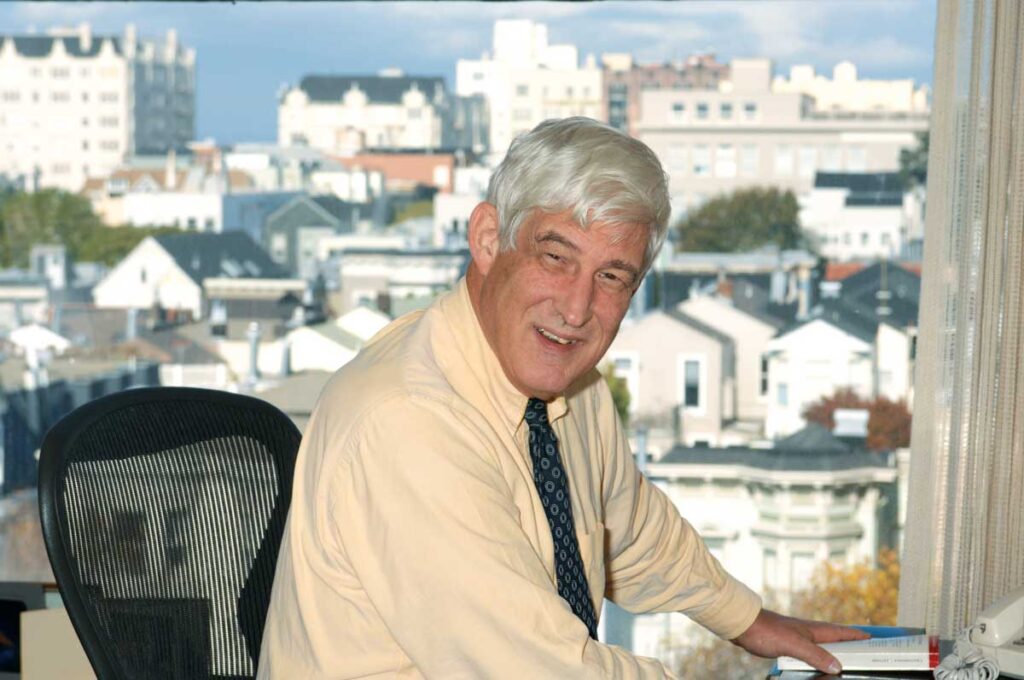
Of his approach to education, Chambers muses, “I’m not an answer guy. My orientation has always been to listen and ask questions.”
The area of ethics is an example of building on positive structure. Although his research and professional presentations on ethics are extensive, Chambers has never taught ethics to dental students. During his tenure as academic dean, however, no Dugoni School graduate ever had his or her license disciplined. He credits that to the fact that every clinical faculty member evaluated and coached every student every quarter on patient relationships and ethics. That was the dental school’s empirical humanism—build the good that is shown to work.
Other professional highlights include editorships of Contact Point and the Journal of the American College of Dentists. His scholarship includes four books and 700 papers in peer-reviewed journals. He has also been granted the highest honor awarded from both the American Dental Education Association and the American College of Dentists. Only Drs. Art Dugoni and Nader Nadershahi have been similarly recognized. (Curiously, the award is named for William Gies, a non-dentist who laid the scientific foundation for the profession.) Also inserted into the mix, he has been a visiting scholar in philosophy at Cambridge University, the London School of Economics and University of California, Berkeley.
He speaks with gratitude of his wife Jean, a banker, who has shared the journey. “She went to 35 years of American College of Dentists and American Dental Education Association meetings,” he says. “She keeps me pointed in the right direction. We have always talked about the positive things that could be done.”
David Chambers thinks in terms of outcomes. “I want,” he says, “to keep the conversation going.”
Of his approach to education, Chambers muses, “I’m not an answer guy. My orientation has always been to listen and ask questions. My fundamental belief is that others have the interest and ability to make their own improvements. My job has been to enhance their opportunity.”
Chambers continues to work 50 hours per week, fostering dialogue around the world and sending out, “to everyone who has ever contacted me about ethics,” a monthly email post called MAP, Moral Action and Professionalism, containing a one-page reflection on some aspect of ethics.
David Chambers thinks in terms of outcomes. “I want,” he says, “to keep the conversation going.”
Eric K. Curtis ’85, DDS, of Safford, Arizona, is a contributor to Contact Point and is the author of A Century of Smiles, a historical book covering the dental school’s first 100 years.